Players and deck
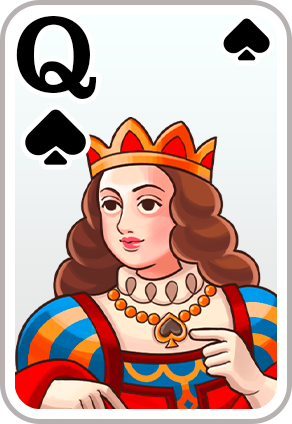
Classic Spades is played by four players in two fixed partnerships using a standard 52-card deck. Partners sit opposite each other. Cards rank from ace high, followed by king, queen, jack, ten, and down to two.

The deal
All cards are dealt clockwise, one at a time, until every player has thirteen cards. The deal moves clockwise after each hand.
Bidding
Beginning with the player to the dealer’s left, each player makes one bid. A bid states the number of tricks that player expects to win. Partners’ bids are added together to form the team contract.
A player may bid Nil, committing to win no tricks. Nil is scored separately from the partnership’s regular contract.

Playing a trick
The player to the dealer’s left leads. Each player then contributes one card clockwise. Players must follow the suit led whenever possible. A player unable to follow suit may discard another suit or play a spade.



Winning a trick
If no spade is played, the highest card of the suit led wins. If one or more spades are played, the highest spade wins. The trick winner leads the next trick.
Leading spades
A player may not lead a spade until spades have been broken, unless that player has no cards from another suit. Spades are broken when a player uses one to trump a trick led in another suit.

Contracts and bags
A team that meets its contract scores ten points for each trick bid and one point for each additional trick. A team that fails to meet its contract loses ten points for each trick bid.
Every overtrick is also recorded as a bag. When a team accumulates ten bags, it receives a 100-point penalty and the bag count rolls over.
Nil and winning the game
A successful Nil bid scores 100 points; a failed Nil bid loses 100 points. Tricks taken by the Nil bidder still count toward the partnership’s contract and bags.
The first team to reach 500 points at the end of a hand wins. If both teams reach the target in the same hand, the team with the higher score wins.